End of Day Banking (Hospital)

  1. Select End of Day Banking from the main menu

  1. This will open the screen where the user can perform the End of Day Banking
  2. For multi-location facilities, ensure the correct location is selected

  1. Check each payment off as it is compared with corresponding data for accuracy
  2. Ensure Totals match the EFTPOS settlement & cash/cheques taken
  3. Total Balance of all revenue received will be shown
  4. Click Save & Print
  5. You will be prompted to confirm that you want to clear the transactions.
  6. Once confirmed with Yes the End of Day Banking Report will be available for printing

Re-Printing End of Day Banking Report

  1. Select Reports from the main menu
  2. Select End of Day Banking

  1. For multi-location facilities, ensure correct location is selected
  2. Select the Date & Time for the required report OR
  3. Select from the list of Last 50 bank deposits
  4. Click Update and the selected report will be displayed on the screen
  5. It can then be Printed or Exported using the corresponding blue buttons at the bottom right of the screen


Delete a Hospital Booking

If an appointment is required to be removed from the system

  1. Search for the patient OR
  2. Navigate to the date & theatre that the patient is booked for
  3. Select the patient & right click to open menu
  4. Select Copy/Cut/Paste/Delete and then select Delete Appointment

  1. You will be prompted to confirm that you are sure you want to delete the appointment
  2. Click Yes
  3. This action is permanent & is not advised if you are required to collate data on cancelled bookings.
    If statistical information on the cancellation is required, then please see instructions on how to Cancel a Booking at https://wiki.fydo.cloud/cancel-a-booking/


Hospital Data Extraction

Exporting Reportable Data (PHDB/HCP/State specific/Cancer Registry)

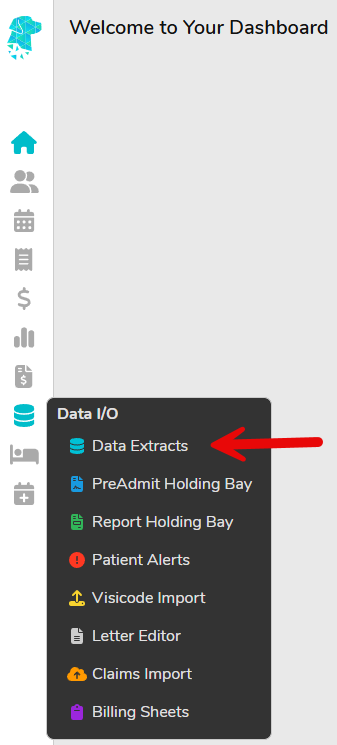
  1. Select Data I/O from the left-hand menu
  2. Select Data Extracts

  1. Ensure correct location is selected (for facilities with multiple locations)
  2. Select the month you need to extract
  3. Select the type of data you need to extract
  4. Select Prepare Extract

  1. You will be shown:

    1. Total Number of Episodes for the period
    2. Number of Episodes Ready to be exported
    3. Number of Episodes with Errors that require attention
    4. A list of the episodes that need amendments in order to have your data ready for submission
    5. An option to print the list of errors, or export it for further action

  1. Navigate to the screen that is identified as Where to fix and amend the information that is required. This can be done with a Right Click on the line or using the Patient Name Hyperlink to navigate to the require screen.
  2. Once all errors have been rectified, follow the above steps again to check that the data is ready to export
  3. Data is ready to export once there are no more errors documented in the list.
  4. Once all errors are rectified the Print & Export To options in the top right corner (e. in the above image) will change to a Submit button. Click Submit
  5. Your data files will be saved in FYDO
  6. You can download this file by using the down arrow ⇓ under the Action column with a normal mouse click (not a Right Click)
  7. You can upload these files directly into the appropriate portal. (Ensuring the file name for BUPA does not contain any symbols)
  8. Once uploaded there is no need to keep a copy of the file on your computer, as you are able to access & download again if required from FYDO.

For instructions on how to Re-Extract Hospital Data visit our wiki page:
Re-Submitting a Hospital Data Extraction


Create a New Patient (Hospital)

There are several ways to do this, but the most common method is during the appointment booking process.

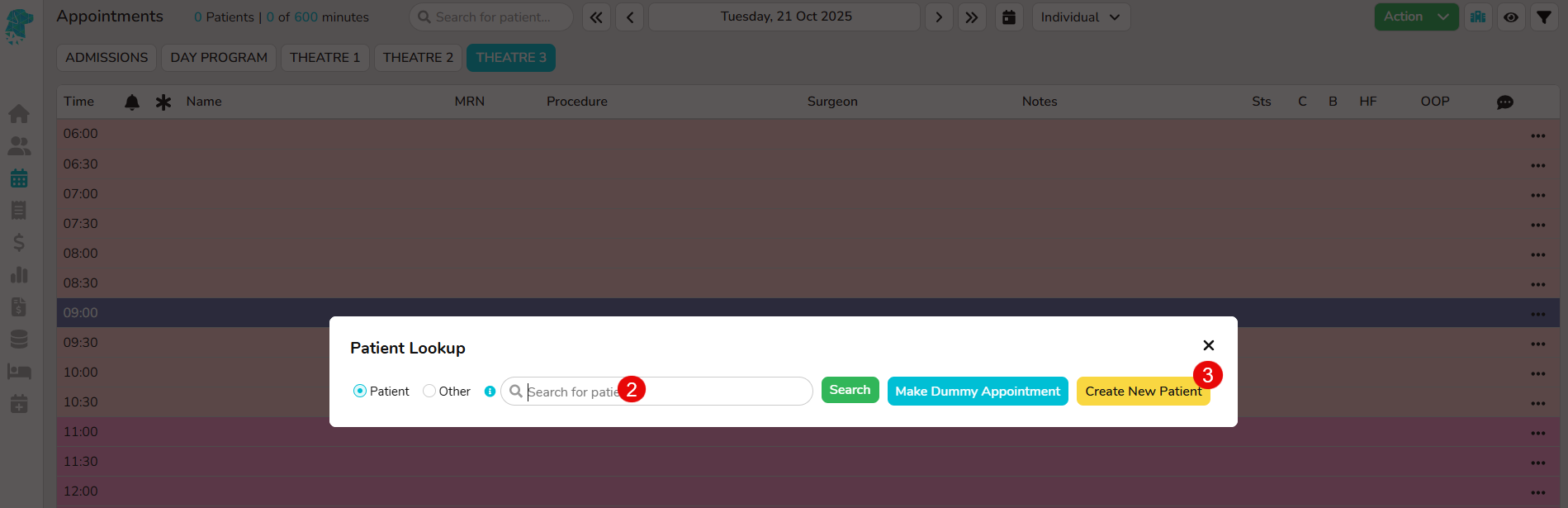
  1. Once you have navigated to the date & time for the appointment, right click & select Make an Appointment
  2. This will open up the Patient Lookup box where you are able to search for the desired patient
  3. If you are unable to locate the patient click the Create New Patient button

  1. You are required to add a minimum of First & Last Name and all other fields are optional when initially adding a patient (but be aware that certain fields may be required, once the patient is admitted, for reporting purposes)
  2. Once all desired information is entered click Save
  3. The appointment screen will then open to add all required information for that particular booking

Patients are also able to be added without having an appointment scheduled.

  1. Select the Patients tab from the left main menu
  2. Search to see if the patient is already entered into the system
  3. If they have not previously been added, click Create Patient

  1. You are required to add a minimum of First & Last Name and all other fields are optional when initially adding a patient (but be aware that certain fields may be required, once the patient is admitted, for reporting purposes)
  2. Once all desired information is entered click Save


Cancel a Hospital Booking

If a patient cancels their appointment

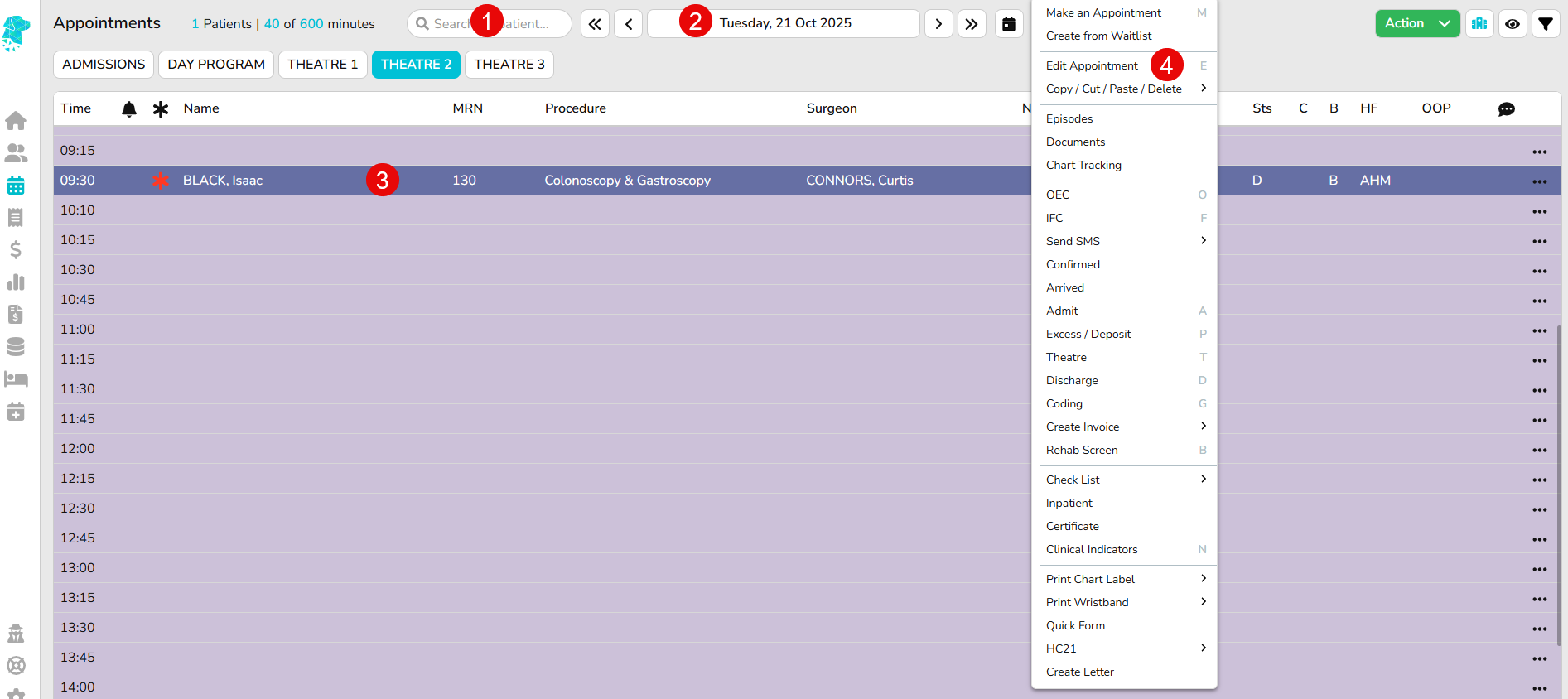
  1. Search for the patient OR
  2. Navigate to the date & theatre that the patient is booked for
  3. Select the patient & right click to open menu
  4. Select Edit Episode

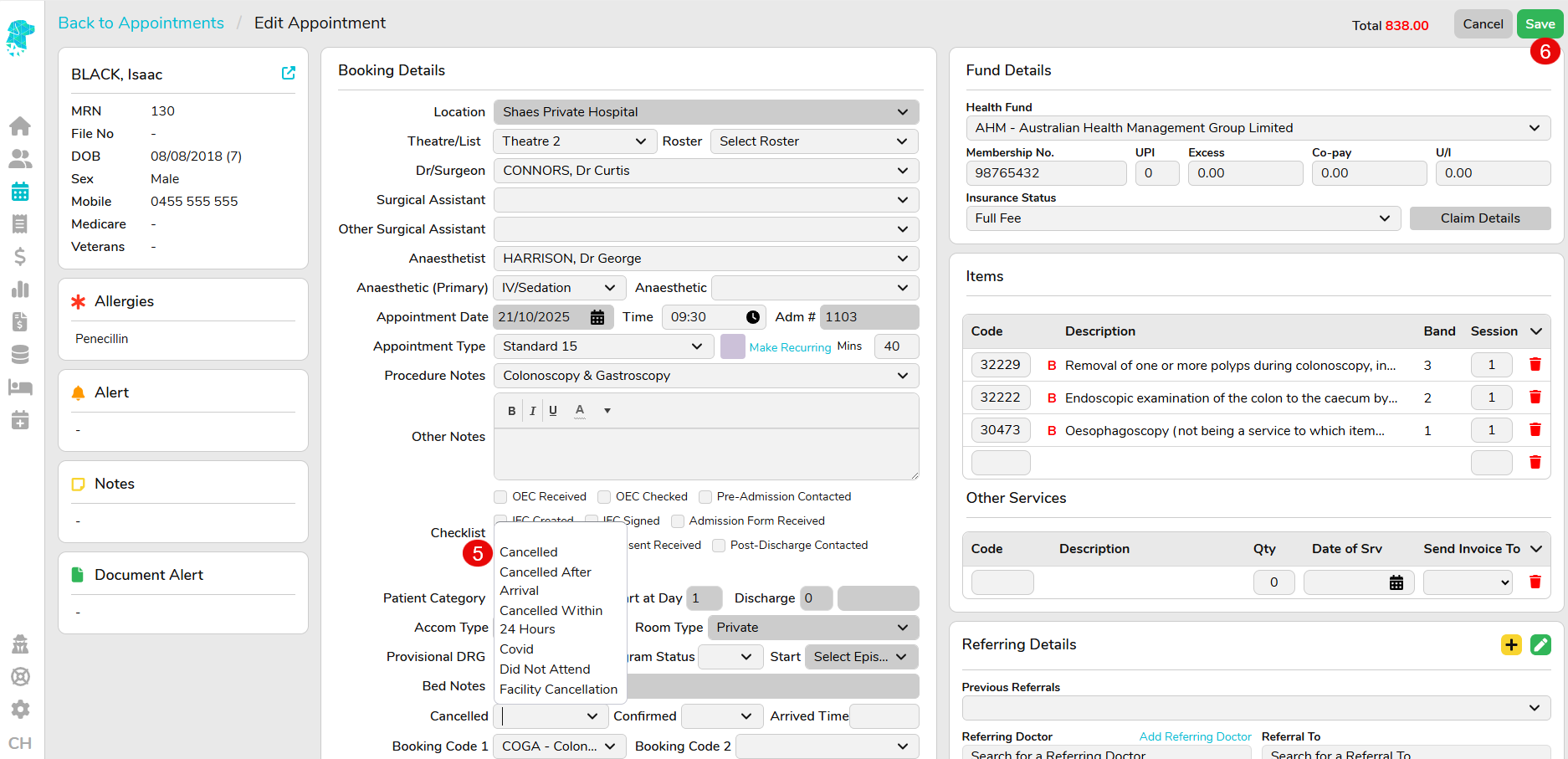
  1. Use the Cancelled drop down to select a reason for cancellation (N.B these cancelled reasons are fully customisable & can be added or edited in Setting under the Cancelled Reasons option to assist facilities obtain the cancellation data that they require)
  2. Click Save

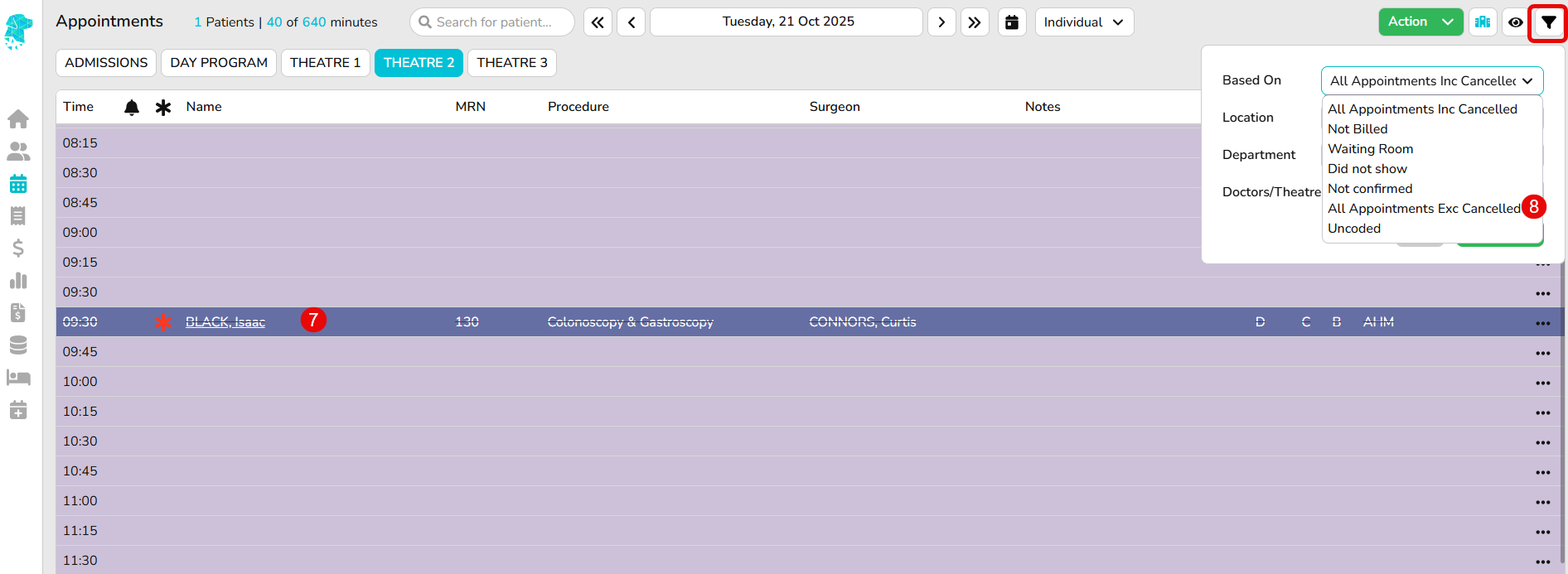
  1. The patient will now be displayed with a strikethrough & the appointment time will be available to book another patient
  2. To view your screen without the cancelled patients, use the Filter Dropdown Based On and select All Appointments Exc Cancelled

  1. To view the cancelled patients ensure you select All Appointments Inc Cancelled from the Filter Dropdown
  2. To reinstate an appointment, follow the above steps 1 > 4 and remove the cancellation reason from the episode before clicking Save

Options for dealing with cancelled patients

Depending on how far a patient is along their journey, there are different ways to handle a cancelled episode. For example, a patient who cancels before arriving at the facility will need to be handled differently than one who cancelled after admission.
The facility should determine the most appropriate option for each individual scenario. Below are a few options for processing these cases in FYDO:

Option 1
If the patient did not arrive at the facility and was not admitted, the standard cancellation instructions above will apply. The episode will not be admitted and will simply be cancelled.

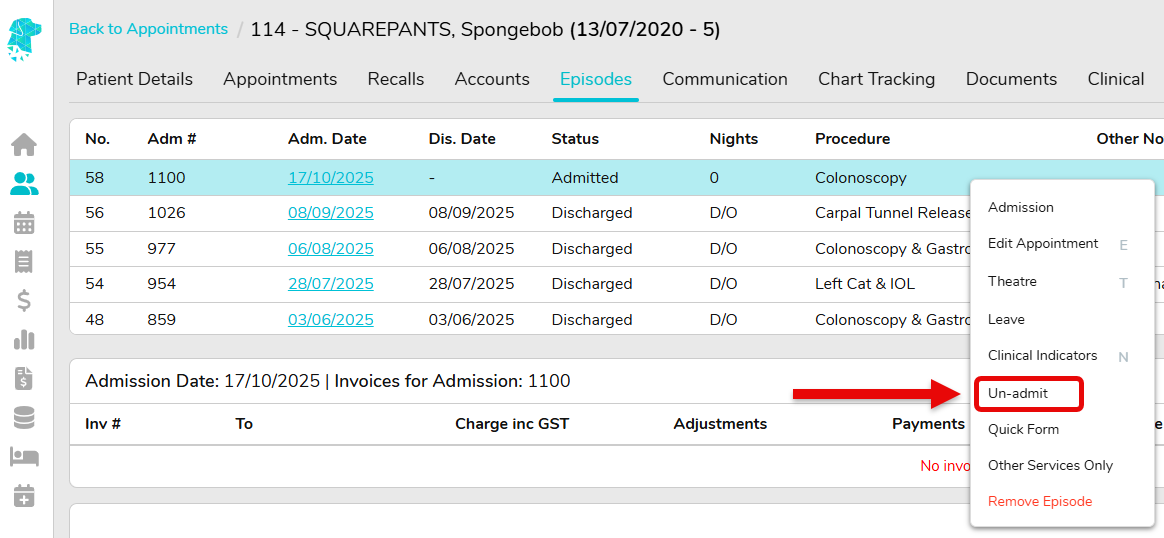
If the patient did arrive and was admitted but did not proceed, the facility can choose to revert the episode back to a booking by Un-discharging and Un-admitting the episode. Again, this will be up to the facility to decide if this is require depending on how far the patient journey progressed.
This can be done via the Episodes Screen by utilising the Right-Click Menu.

The patient may need to be refunded any moneys paid, or the facility may choose to keep it and apply to another admission down the track.

Option 2
If the patient was admitted and progressed partway through their journey, the more appropriate option may be to complete the episode by admitting and discharging them.
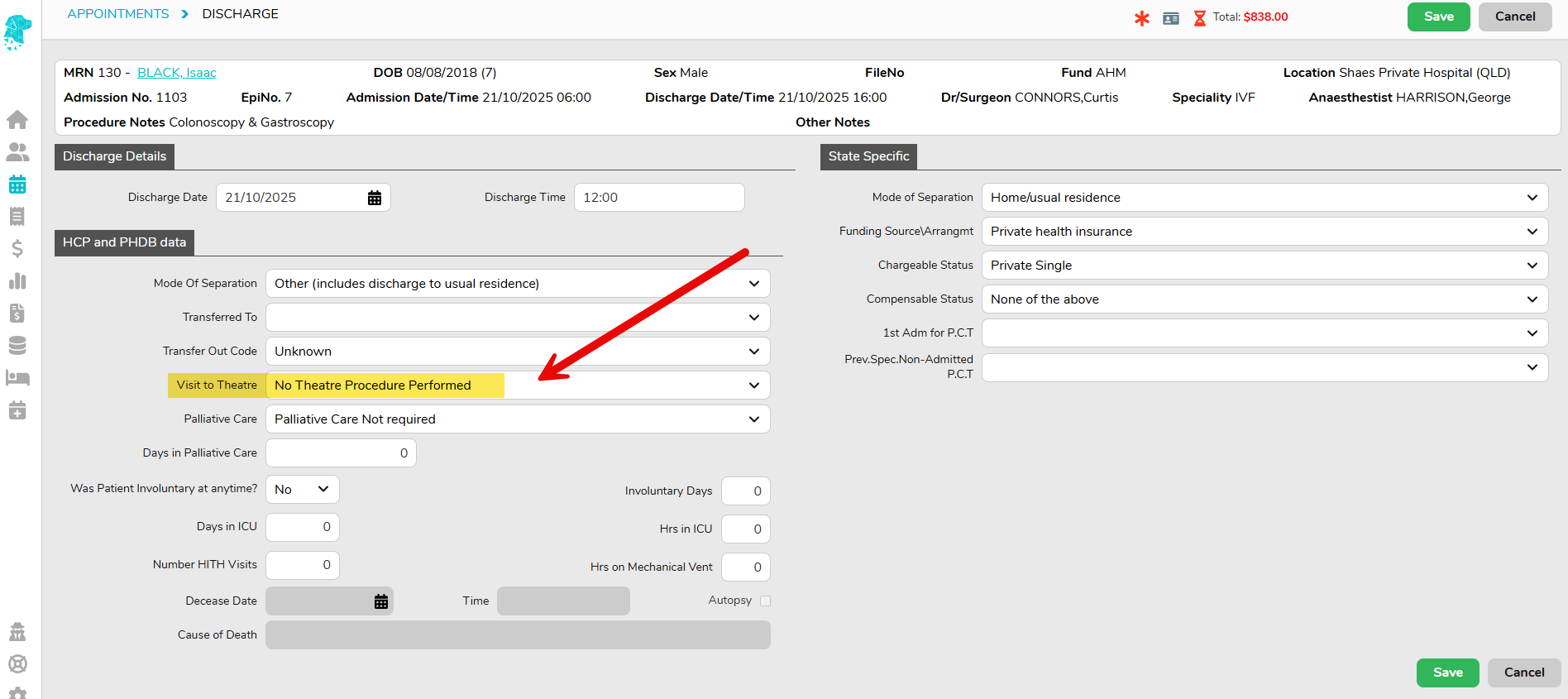
Depending on how far they progressed, you may need to populate the Visit to Theatre field with No Theatre Procedure Performed when discharging the episode.

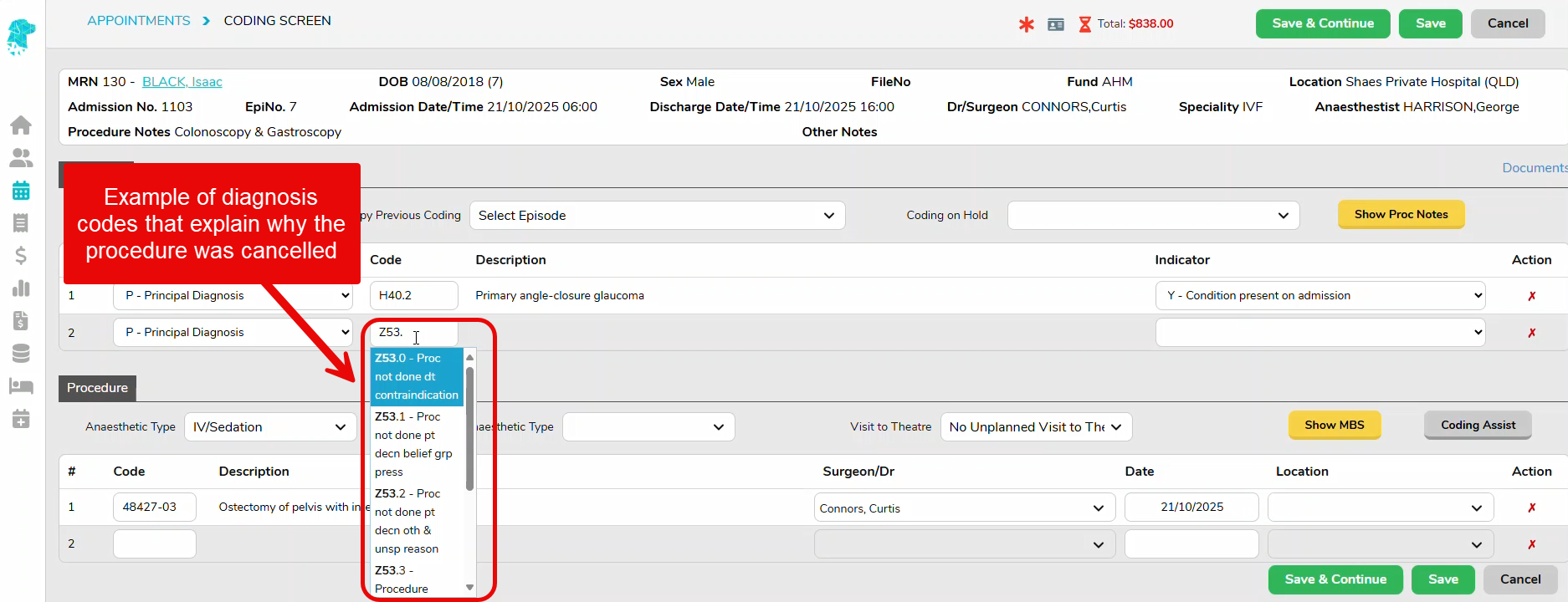
As every discharged patient is reported to the Department of Health, a principal diagnosis code is mandatory. If the facility opts to admit and discharge the episode, it will need to be coded.
Please confirm the correct process with your coder. However, as an example, there would typically be a primary diagnosis code, and an additional diagnosis code explaining why the procedure was cancelled.

Other Notes
When raising an invoice, please be aware that if an accommodation band is billed, it is implied to the health fund that the patient received an anaesthetic. In this instance, an anaesthetic procedure code must also be included in the coding screen.
Facilities will need to check their individual health fund contracts in order to decide if they can raise a charge for the particular admission.

Cancellation Reasons

Facilities may be required to collect different cancellation information for benchmarking, auditing, accreditation, and reporting purposes. FYDO makes this easy through customisable Appointment Cancellation Reasons.
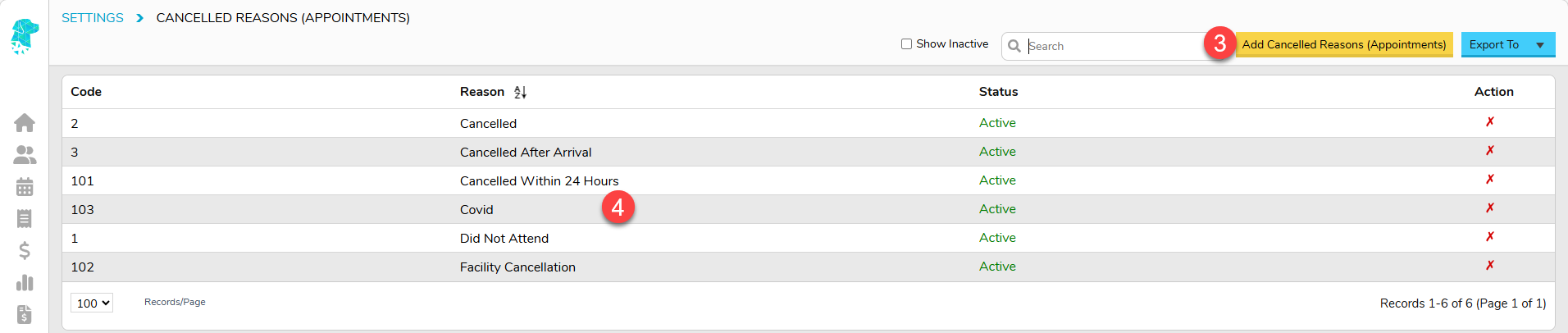
Statistics such as Cancelled After Arrival, Cancelled Within 24 Hours, Facility Cancellation and other site-specific categories can all be configured as Cancelled Reasons (Appointments). Once configured, these reasons can be utilised in reporting to provide visibility into why appointments are being cancelled and identify trends over time.
To ensure accurate reporting, your facility should configure the cancellation reasons required for your workflows and educate staff on when each cancellation reason should be used.
Follow the instructions below to set this up.

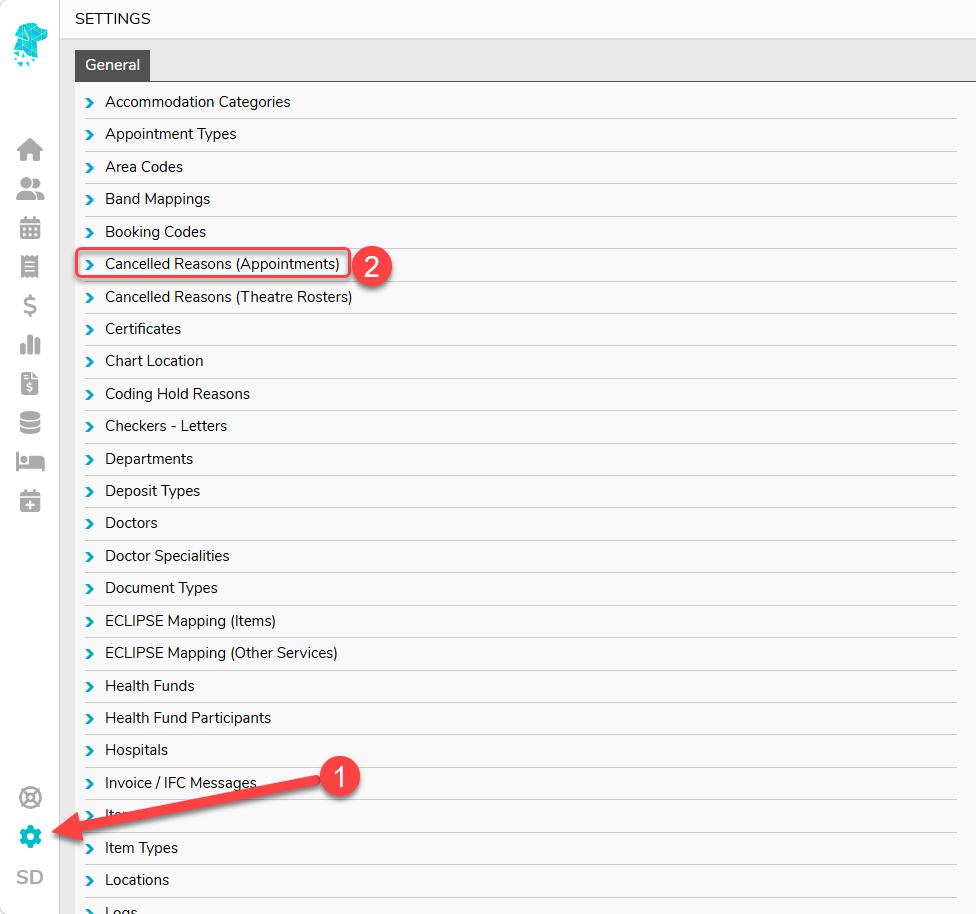
  1. Navigate to Settings
  2. Select Cancelled Reasons (Appointments)
  3. Click Add Cancelled Reasons (Appointments) to add new cancellation reasons
  4. Double click on an existing cancellation reason to amend it

Utilise the correct Cancellation Reason when cancelling bookings, as per the instructions at the start of this page, and statistics than then be obtained from Reports.

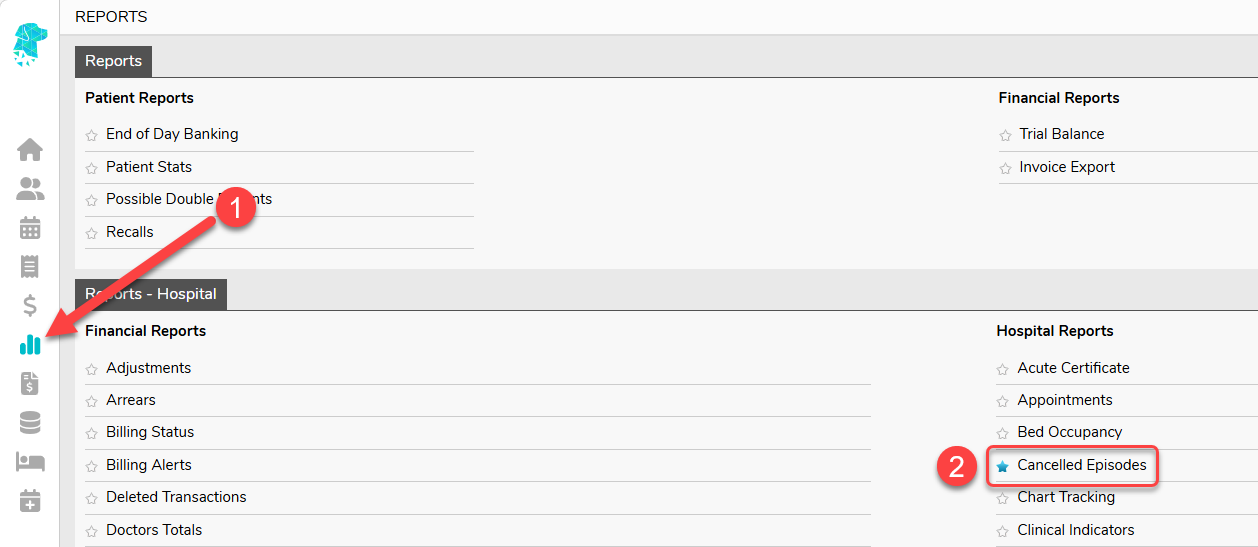
  1. Navigate to Reports
  2. Select Cancelled Episodes
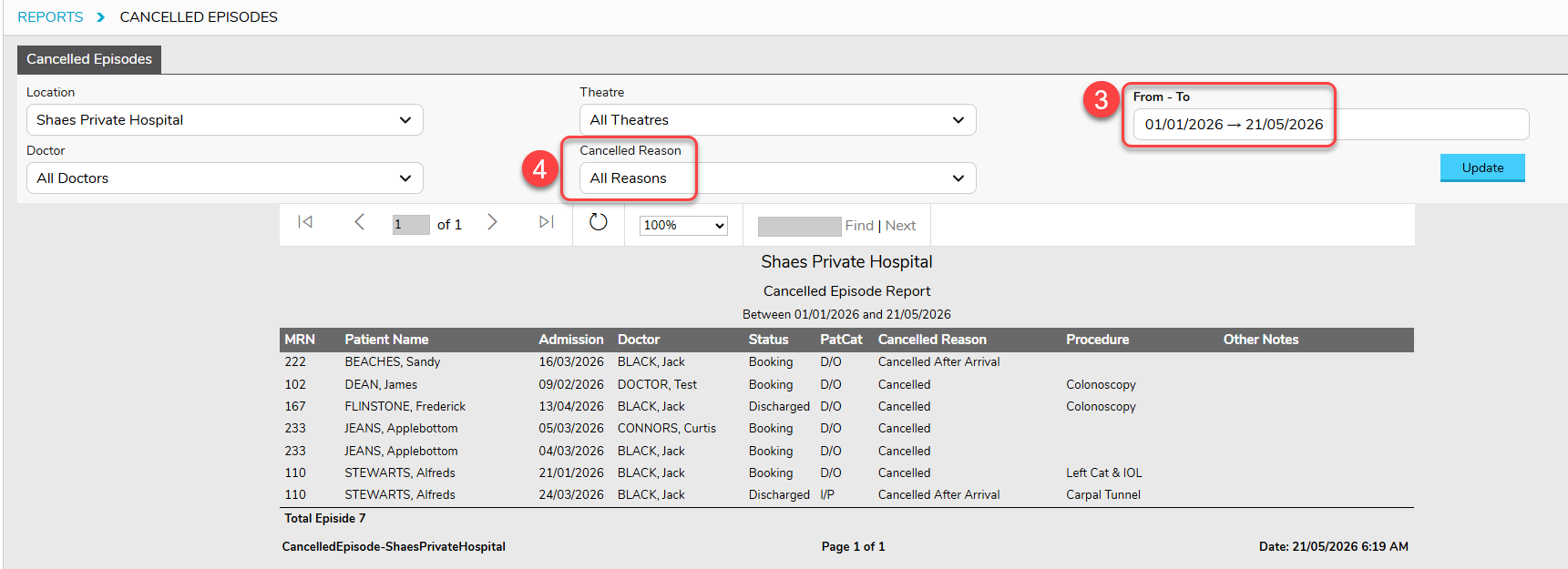
  3. Simply run the report for the date range required for a comprehensive list of all cancelled procedures, or
  4. Utilise the Cancelled Reason filter to obtain statistics on specific cancellation types


Hospital Appointments Screen

Navigating the Appointments Screen

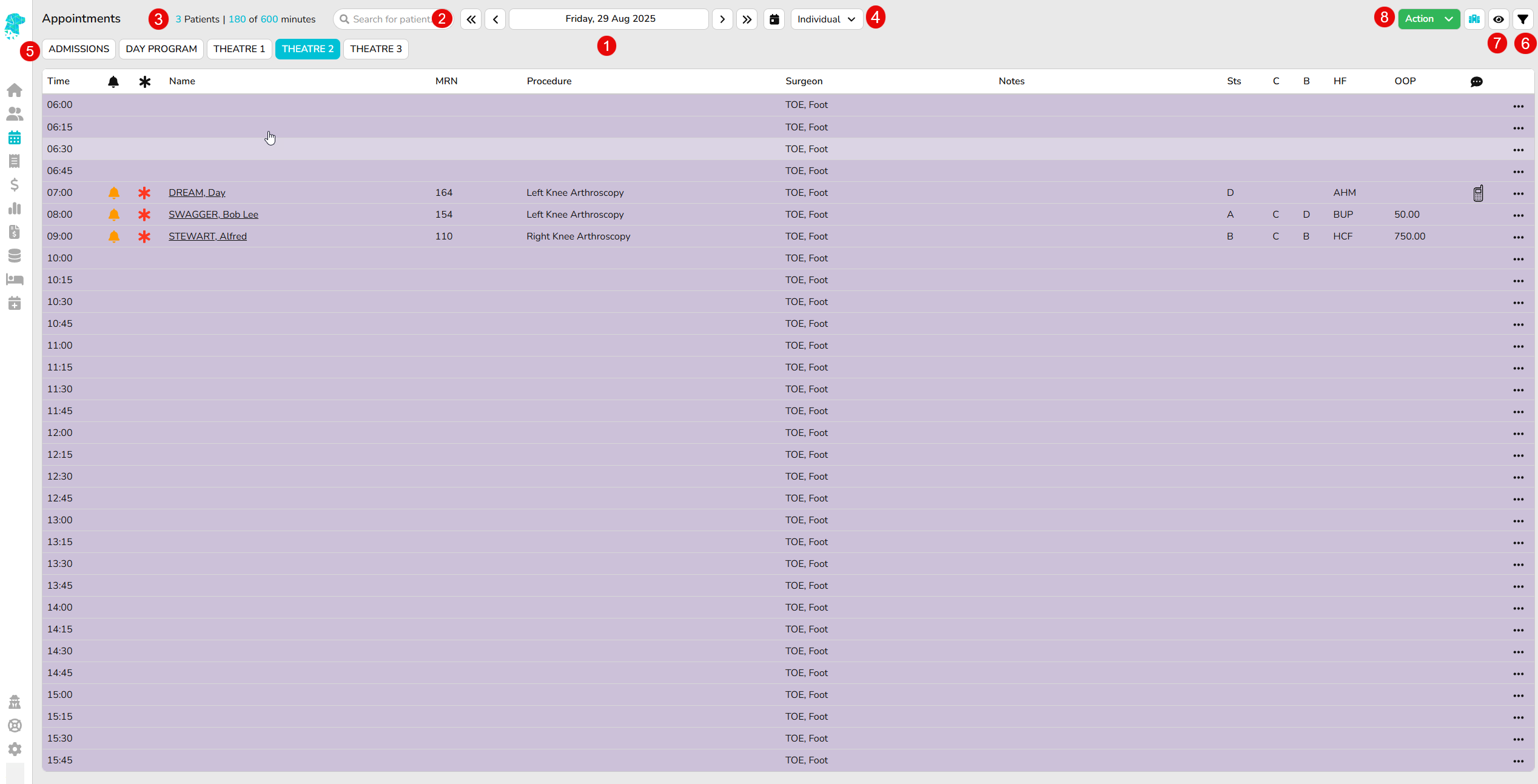
  1. Date – Click on the date to display the calendar to select required date
  2. Search – to locate a particular patient/booking
  3. Info – will display the Number of patients booked & Minutes the theatre is being utilised
  4. View – gives the ability to choose how the theatres are displayed

    1. All – shows all theatres for 1 day
    2. Individual – shows 1 theatre for 1 day
    3. Weekly – shows 1 theatre for the whole week
    4. List – shows all appointments in 1 list

  5. Theatres – are able to be selected here
  6. Filter – the patients viewed to include/exclude cancelled patients etc
  7. Custom Views – Create and select Custom Views to displayed relevant information
  8. Action Dropdown allows users to
    Print Theatre Lists
    Send Bulk SMS
    Re-Order Lists


Hospital Adjustments

Adjustments via the Adjustments Screen

If an adjustment is required for refund, write off, incorrect billing purposes etc it can be done using the Adjustments Screen or from the Patient History / Episode screen. Both options are explained below.

Making the entry from the Adjustments Screen

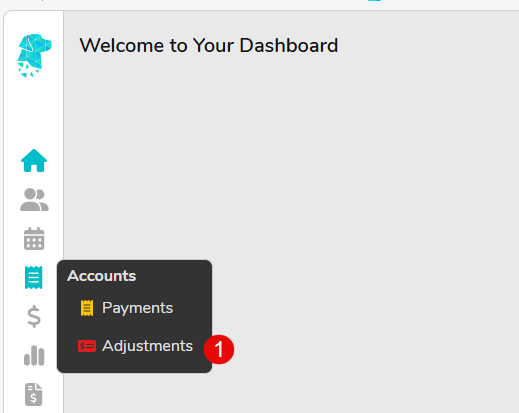
  1. Go to Accounts in the main menu & select Adjustments

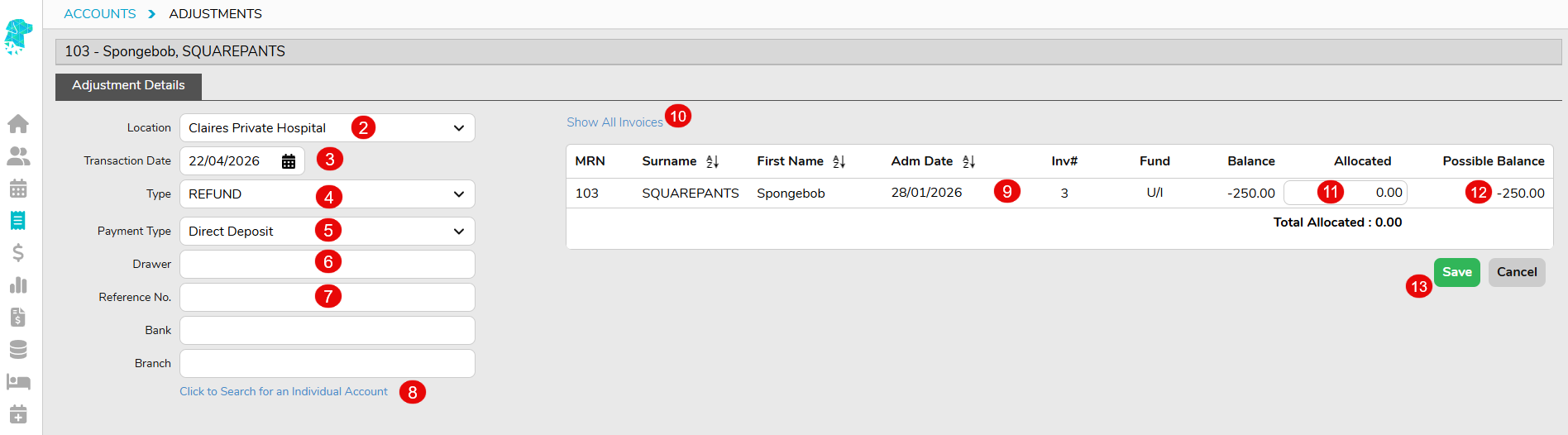
  1. For multi-location systems, use the drop down to select the relevant Location
  2. Enter the required Transaction Date if it differs from the current date
  3. Use the Type dropdown to select the required transaction type e.g., write off, incorrect billing, discount, refund etc.
  4. If Refund is selected as the Type, the Payment Type field will be displayed so the method of the transaction can be documented. For all other journal / adjustment Types this field will not be necessary & won’t be displayed
  5. Type the required information in the Drawer field
  6. Use the Reference No., Bank & Branch fields, if the facility work instructions require, to document additional information regarding a bank cheque for refunds etc
  7. Click “Click to Search for an individual Account” and the search box will be displayed to find the required patient. (If processing this adjustment from the Episodes Screen any outstanding invoices will automatically be displayed)
  8. Once a patient is selected, the invoices with an outstanding amount will be displayed
  9. Use the Show All Invoices option to display invoices that don’t currently have an outstanding balance
  10. Type the amount to be refunded in the Allocated column
  11. Once you have moved from the Allocated field the system will show you the Possible Balance of the invoice, following the adjustment
  12. Once all details have been confirmed & are correct click Save
Making the entry from the Episode Screen:

  1. Search for the patient using the Search field or by selecting the required admission date & theatre
  2. Right-click on the appointment & select Episodes
  3. Once in the Episodes screen ensure that the correct date of admission is selected
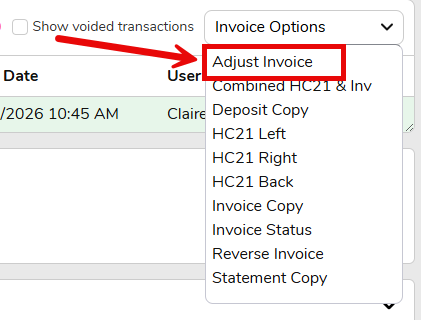
  4. Then use the Invoice Options drop down on the right of the screen to select Adjust Invoice

  1. You will be redirected to the Adjustments screen where you can follow the instructions above from step 2.


Tokens – Mailing Label

Token Name Data Notes
<<PracticeName>> Practice Name
<<Title>> Title
<<FirstName>> First Name
<<LastName>> Surname
<<MailingAdd1>> Location Address 1
<<MailingAdd2>> Location Address 2
<<MailingAdd3>> Location Address 3


Tokens – Documents & Letters


Token Name Data Notes
<<DocFullName>> Doctor Full Name eg. SMITH, John
<<DocFirstname>> Doctor First Name eg. John
<<DocSurname>> Doctor Second Initial eg. SMITH
<<DocTitle>> Doctor Title
<<DocID>> Doctor ID
<<DocAdd1>> Doctor Address 1
<<DocAdd2>> If Address Line 2 is empty, this will show Suburb State Postcode
otherwise it will show Address Line 2
<<DocAdd3>> If Address Line 2 is empty, this will show nothing
otherwise it will show Suburb State Postcode
<<DocSuburb>> Doctor Suburb UPPERCASE
<<DocState>> Doctor State UPPERCASE
<<DocPC>> Doctor Post Code
<<DocMob>> Doctor Mobile 9999 999 999
<<DocPh>> Doctor Phone 99 9999 9999
<<DocFax>> Doctor Fax 99 9999 9999
<<DocEmail>> Doctor Email
<<DocQualif>> Doctor Qualification
<<DocLoc>> Doctor Location
<<DocProv>> Doctor Provider Number
<<DocABN>> Doctor ABN
<<DocInvAs>> Invoice As for Clinic
<<DocAccName>> Doctor Account Name
<<DocBSB>> Doctor BSB
<<DocAccNum>> Doctor Account Number
<<DocBankAdd>> Doctor Bank Address
<<DocBank>> Doctor Bank Name
<<RefFullName>> Referring Doctor Full Name eg. SMITH, John
<<RefFirstName>> Referring Doctor First Name eg. John
<<RefSurname>> Referring Doctor Surname eg. SMITH
<<RefTitle>> Referring Doctor Title
<<RefID>> Referring Doctor ID
<<RefPractice>> Referring Doctor Practice
<<RefPracId>> Referring Doctor Practice ID
<<RefAdd1>> Referring Doctor Address 1
<<RefAdd2>> If Address Line 2 is empty, this will show Suburb State Postcode
otherwise it will show Address Line 2
<<RefAdd3>> If Address Line 2 is empty, this will show Suburb State Postcode
otherwise it will show Address Line 2
<<RefSuburb>> Referring Doctor Suburb UPPERCASE
<<RefState>> Referring Doctor State UPPERCASE
<<RefPC>> Referring Doctor Postcode
<<RefMob>> Referring Doctor Mobile 9999 999 999
<<RefPh>> Referring Doctor Phone 99 9999 9999
<<RefFax>> Referring Doctor Fax 99 9999 9999
<<RefEmail>> Referring Doctor Email
<<RefQualif>> Referring Doctor Qualification
<<RefSpecID>> Referring Dr Speciality ID
<<RefSpec>> Referring Dr Speciality Description
<<RefLoc>> Referring Doctor Location
<<RefProv>> Referring Doctor Provider Number


Adding SMS templates

Do you regularly SMS patients? If so, you can create custom SMS templates to save time typing up the message every time and to send tailored messages, complete with the patient’s name, appointment time, serving doctor, and more.

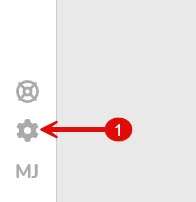
To begin, first go to Settings.


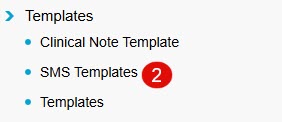
Then click on
SMS Templates under the templates menu.


This reveals the SMS templates currently available. By default, an Appointment Reminder template will be available to you. 


Adding a new SMS template

To add a new SMS template, click on the Add SMS Template button.


Then, select the SMS Type, enter the template Name, and type out the SMS content in the Description field.


SMS Tokens

You can use ‘SMS tokens’ which are commands that look like: <<patfirstn>> to send tailored SMS messages. The aforementioned token for instance dynamically pulls the patient’s first name. 

There are SMS tokens for patient details, appointment details, doctor/ practice details, referral details, and more. 

For a full list of tokens, click the link below:

https://wiki.fydo.cloud/?s=tokens

Once you’re happy with the contents of your SMS template, click Save and you’re done! Your new SMS template will be available next time you wish to send a custom SMS message.

For some SMS Template ideas see our helpful wiki page https://wiki.fydo.cloud/sms-template-examples/